How Low-Code Modernization Eliminates Technical Debt Fast

Technical debt accrues silently throughout organisations, and forms an invisible wall to innovation and ramps maintenance costs to unsustainable levels. Old product systems built on old technology keep their eyes glued, are difficult to integrate with new cloud services, and slow down the velocity of all new projects. The low-code modernisation approach is a game changer and in this case, the companies are able to replace decades of acquired debt by rapid, scalable platforms in weeks as opposed to years. This will give organisations an instant payoff and place them in a faster track towards a digital transformation. The Heavy Burden of Legacy Systems on Modern IT The old bases of code turn into organisational anchors, taking up sixty to eighty percent of IT budgets and producing a progressively decreasing value. Any new feature requires months of careful refactoring and entangled interdependencies and manual testing in the old outdated environments. The issue is aggravated by the fact that integration nightmares lead to these systems failing to integrate with mobile apps, cloud-platforms, or AI platforms. The issue in question introduces data silos, which hinders analytics and process improvements in the customer-experience segment. Assurance weaknesses compound as the patches do not pass the compatibility test and compliance requirements exceed the responding capacity. Lost opportunity is actually the real cost. Quarter after quarter, development teams are in the process of unifying the mouldered COBOL or FoxPro code, they are not developing revenue-generating features. Business stakeholders are forced to wait a long time before they perform basic improvements as competitors take advantage of modern platforms to perform rapid iteration and market responsiveness. Transforming IT: Low-Code’s Modernization Power The low-code platforms redefine this dynamic fundamentally by providing visual development tools where drag-and-drop interfaces replace code of thousands of lines. Ready-to-use connectors, automated tests, and cloud-native architecture open the door to getting rid of any custom middleware, non-manual QA, and scalability problems, respectively. The speed of development is ten times higher and the custom code is eighty percent reduced to liberate IT teams to undertake strategic efforts. The gradual depreciation of legacy functionality without disrupting business is allowed by the so-called strangler pattern approach. It should also start with high-pain areas, like reporting portal or approval workflow and then core systems should be migrated over time. A fifteen-year-old loan-processing system was replaced with a Mendix low-code system and it took the regional bank eight weeks to develop instead of continuing with one and a half years of development time, and only eight weeks to create a system capable of using field agent mobile approvals and took seventy percent less time to maintain. Visual Development Eliminates Code Bloat Low-code also substitutes the labyrinthic procedural programming code with declarative visual programming. Workflow logic is represented as an intuitive flow chart, data relationships as entity charts, user interfaces as a result of drop and drag components. A five-hundred-line Java validation code is converted into a graphical decision tree, which can be customized by the business analysts. This abstractiveness makes business logic readable to the stakeholders as well as removes eighty to ninety percent of boilerplate code which has plagued traditional systems. Ready-made connectors eliminate all integration debt. Old-fashioned systems are stagnant in bespoke point-to-point middleware; low-code applications nowadays deliver more than five hundred standard integrations to SAP, Salesforce, Oracle, AWS, and ERPs custom to industries. Weeks of development are replaced by a single configuration screen, and contains an embedded authentication, data transformation, retry logic, and scalability. Empowering Citizen Developers Low-code also opens the hidden potentials in the organisation by allowing business analysts, operations managers and power users to create applications without IT capsules. Role-based access control enables business individuals to own the requirements but IT controls the security and architecture. This model of citizen-development becomes capacity multiplied five times – business units create easy application, IT works on complex integrations and shadow IT vanishes in controlled self-service. Nurses, clinicians, and other health professionals have linked dozens of patient portals to single low-code applications, but then, an eighty-five percent drop in support tickets and a tripled- fold rise in self-service uptake is beneficial. Manufacturing companies substituted twenty-year-old ERP customisations, reducing month-end closing modes by ten days to two hours in addition to achieving real time supply chain visibility. Built-in Governance Prevents Debt Recurrence Contrary to the traditional development where shortcuts build up, low-code platforms practice best practices at the very beginning. With automated testing, all changes are tracked in version control, all the performance is provided with optimisation advice, all the vulnerabilities are found in advance in security scanning before production. All the applications go through enterprise-rich DevOps pipelines that are the same as Fortune 500 CI/CD. With transformations in regulatory reporting by ninety percent faster and zero post-migration violation audit trail, forty-seven siloed compliance apps have been consolidated across single low-code platforms at financial services firms with unified audit trails. The governance layer ensures technical perfection coupled with speed of change of business in a quick fashion. Measuring the Overnight Transformation Success metrics demonstrate radical changes of technical improvements, business, and governance aspects. These volumes of custom code are reduced by a factor of eighty per cent or better, integration points disappear, and feature turnout of months to days. It has been found to be advantageous to the business, with decreased time-to-market, increased user adoption and direct revenue impact of new capabilities. Maintenance expense is reduced by sixty to ninety percent and compliance audit pass rates go to one hundred percent. The payback period of ROI is realised in three to six months, as compared to three to five years of rewrites in the traditional context. The overnight effect arises within the context of the way of low-code replacing the complete problematic systems instead of fixing one component. A single migration of platforms removes decades of poor decisions that have been accumulated and can open up completely new possibilities. Strategic Implementation Roadmap Start with executive sponsorship and pain determination of high-pain legacy assets. Phase one provides quick wins
From Browsers to Buyers: How Salesforce Marketing Cloud Recovers

Abandoned Carts Cart abandonment is one of the biggest challenges that retailers continue to face in an extremely competitive environment of e-commerce. Evidence has shown that up to 70% of online shopping carts are not followed through with before a purchase is finalized, therefore, creating significant losses to the revenue. The divide between the browsers and buyers is often quite a wide gap, as their would-be customers lose interest, leaving because of the complex checkout process, unexpected expenses, or the lack of customization. As a way to fill this gap, the retailers tend to resort to advanced solutions like Salesforce Marketing Cloud, which is a powerful platform that provides the tools to understand the behaviour of the customers, personalize the interaction process and re-engage them, by means of efficient re-engaging. This paper discusses the ways Salesforce Marketing cloud can help retailers to alleviate cart abandonment and convert first-time window shoppers into serious buyers. Understanding Cart Abandonment The phenomenon of cart abandonment occurs when a customer adds something on a shopping online cart and leaves the site without completing the purchase. The reasons as to why this happens are varied and varied: high shipping costs, the lengthy checkout processes, security concerns, or indecisiveness towards the item. Every abandoned cart represents a lost conversion opportunity and the associated revenue, regardless of the cause, based on this fact, retailers are focusing on the behaviour of the discerning shoppers and differentiating their communication to re-engage them prior to their moving to other platforms. The collection of marketing automation and data-driven solutions of Salesforce Marketing Cloud allows firms to examine instances of abandoned cart and cover segments and deploy recovery campaigns precisely geared at those audiences. Personalized Communication to Re-Engage Shoppers One of the strength areas of Salesforce Marketing Cloud is its ability to build customised customer experiences. The platform builds rich personas by pulling together data of various touchpoints, such as browsing history, purchase behaviour, and customer preferences. In case a shopper drops a cart, Salesforce Marketing Cloud would be able to initiate automated communications related to their respective interests and shopping behaviors. As an example, an email can include the left behind items with a personalised promotion or suggest other complements. The dynamic content blocks further customize messages according to the customer inclinations, hence increasing the likelihood of re-engagement. Multichannel Campaign Orchestration Cart abandonment recovery is best when performed in different channels. With Salesforce Marketing Cloud, retailers are now able to reach out to the customers through email, SMS, push notifications, social-media advertising and web messaging and coordinate it in an omnichannel. A customer may get a reminder message a few days after leaving, and then be reached out to with a specific SMS in case of an untrail of the cart, and even be shown a social-media advertisement with similar products. By managing this integrated and consistent communication, they create prominence in reminding customers of what they would have purchased, avoiding overburdening them. Real-Time Behavioral Triggers and Automation Salesforce marketing cloud enables real-time and triggers based marketing which reacts in real-time to customer activities. In the case of the cart being left, the system can start work processes that automatically do recovery messages within minutes. The live processing of the information makes manner of interacting with customers timely and relevant, as well as to get hold of the customer when interest levels are high. This is critical in the timely conversion of browsers before they give up on the purchase they planned and move to other rival merchants. Reducing Friction Through Seamless Experiences Salesforce Marketing Cloud will also contribute to the reduction of the friction points that will trigger cart abandonment in the first place. Through commerce and CRM aggregation, the marketers will be able to understand the point at which the customers renounce the purchasing funnel. This understanding will allow streamlining the checkout experience, improving the payment choices, and proactively solving the most frequent issues by asking questions in the form of frequently asked questions (FAQs) or chatbots integrated into the user experience. Personalisation does not just focus on messaging but the overall shopping process itself thus making it more dynamic and customer-centric. Leveraging AI and Predictive Analytics Many intelligent capabilities of Salesforce Marketing Cloud use artificial intelligence, such as Einstein AI. Predictive analytics are used on the platform to identify customers who are at high risk of cart abandonment and focuses on recovery efforts based on this evaluation. AI also suggests individualisation, the best time to send messages, and messages and content that have the highest likelihood of capturing the interest of individual shoppers. Being a certain data-driven strategy, it makes the most unusual out of every interaction, hence, maximizing the rates of conversion and ROI of marketing campaigns. Measuring and Optimizing Recovery Campaigns The critical feature of Salesforce Marketing Cloud deployment is its resourceful analytics as well as reporting tools. The retailers are able to track the rates of cart abandonment, recovery, campaign performance, and customer engagement across all the channels. These insights make it easy to constantly optimise messaging strategies, frequency, price breaks, and (general) customer journey design. A/B testing on the platform determines the most effective content and time, so that marketing activities can develop in accordance with the preferences of the shoppers. Case Study: A Retail Success Story Suppose a fashion retailer faces a 65 -percent cart abandonment rate. When embracing Salesforce Marketing Cloud, the firm invented personalised and autonomous recovery movements that incorporated emails, SMS, and push messages. They used AI-based forecasting to identify priority customers using highly relevant content and tailored deals at the right time. The retailer was able to recoup 20 per cent of the carts and a significant customer lifetime value rose within a period of six months. This achievement highlights the fact that Salesforce Marketing Cloud turns abandonments into repurchases and long-lasting relationships. Conclusion Cart abandonment poses daunting challenges to an online retailer, but it is also an opportunity to learn more about the customer and enhance their contact.
Bridging the Gap: Creating Seamless Online and In-Store Retail Experiences with Salesforce

The modern and fast-changing retail world does not see customers as the perpetrators of the online-in-store transaction but expect a highly mobile, integrated, experience throughout all channels. Browsing a mobile app and/or researching the products via social media, customers demand consistency, convenience, and customization whether they are shopping in a brick-and-mortar store. This expectation makes the retailers flexible to their customers and build loyalty, generate sales, and outperform competition. Salesforce give brands the power to bring together data, enable AI-powered personalization, coordinate customer experiences, and scale these connected experiences. The Changing Face of Retail: Why Unified Experiences Matter Customers now shop across multiple channels, browsing online then buying in-store, or using phones while shopping physically. While online sales continue growing, physical stores remain essential as experience centers for product trials, events, and convenient order pickups. This changing pattern requires the retailers to leave behind operation silos. The lack of integration between data obtained by POS systems, e-commerce implementation, loyalty programmes, customer services, results in patrons receiving incoherent messages, and fragmented offers as well as annoying services. Multi-system retail employees are wasting time in changing tools rather than serving clients, and thus fail to create customer satisfaction and retention. Unified retail experiences ease these pain points through the smooth combination of data and processes. How Salesforce Drives Unified Commerce The Retail Cloud is a one-stop-shop that gathers conventional retail functions traditionally divided sales, order management, e-commerce, loyalty programmes, and marketing campaigns, and puts them on a single platform offered by Salesforce. Leveraging combined customer buying behavior, preferences, and interactions down the channel into a complete 360-degree profile will make it possible to ensure individual customer interaction across the lifecycle of the customer relationship and leverage Salesforce. One of the keys is Salesforce Commerce Cloud that centrally stores orders in the online and bricks and mortar backgrounds and enables the existence of versatile fulfilment mechanisms like the buy-online- pick-up-in-store (BOPIS), curbside pickup, same-day delivery, and easy returns. Inventory can be viewed in real time giving retailers visibility to inventory and guaranteeing the customer access to correct availability data whether in-store or through a mobile phone. One key example is Salesforce Commerce Cloud that centrally manages orders across online and physical stores, enabling versatile fulfillment options like buy-online-pick-up-in-store (BOPIS), curbside pickup, same-day delivery, and easy returns. White Fox Boutique, an Australian fashion retailer using Salesforce, saw a 40% uplift in Black Friday sales through this unified system. Real-time inventory visibility ensures retailers always show accurate stock levels, guaranteeing customers access to correct availability data whether shopping in-store or via mobile. Getting instant access to purchase histories, wishlists, and loyalty data, retail associates can receive personalised recommendations and resolve issues faster with Salesforce Service Cloud. Salesforce Einstein layer is an AI-based solution that anticipates customer behaviour using predictive analytics to serve targeted offers and convert and retain customers to their maximum potential. Delivering Personalization at Every Touchpoint Shoppers today require brands to understand that they are individuals that need to be recognised in every channel and deliver via experience. Using Salesforce Marketing Cloud, retailers can build an omnichannel campaign based on real-time behaviours , abandoned carts receive personalised emails, push notifications, or even in-store promotions. Making use of Salesforce, White Fox Boutique, an Australian fashion retailer, was able to drive its Sales up by 40 % , applying SMS and the app to send time-specific mobile offers and cart reminders. The personalisation by Salesforce AI is further increased through the past and present analysis and suggests the customers with the most relevant products, figure out the most convenient time to serve the content, and identifies at-risk customers. This strength helps brands to interact with consumers in dynamic and relevant communications that increase purchase rate and average order volume. Enhancing In-Store Experiences The physical stores have developed to include experience and service centres, in addition to being the point of sale. Salesforce helps retailers to rethink layouts to support such services as product customisation, repair services, workshop, and interactive showcases that are driven by augmented reality. These unique in-store amenities attract traffic, enhance the attachment, and supplement the online interactions. Mobile solutions also keep customers active in stores as they allow the shop not only to scan QR codes to get more information about their desired products but also to locate an item anywhere, create a custom shopping card, and even purchase goods via their phone. These innovations that combine offline and digital touchpoints put gen z shoppers twice as likely as Baby Boomers to use store applications to check out. Overcoming Operational Complexity Salesforce eases the retail technology stack behind the scenes. The workers are no longer required to use a dozen fragmented tools, instead they can handle the sales, stocks, customer-service and fulfilment using integrated Salesforce websites. Service Cloud provides a single point of interface that enhances training and accelerates productivity as well as ensuring that there is minimisation of employee turnover. The AI-based training programmes and knowledge sharing tools offered by Salesforce train retail workers to ensure the effective use of technology, which improves the level of services. This process of agility will promote quick implementation of new online programs and support operational flexibility. Building Loyalty Through Connected Experiences Customer-united data make the loyalty programmes more powerful. The Salesforce Loyalty Management enables retailers to create dynamic reward models that include cashback, premium experiences, tiered memberships and are attractive to various customer groups. The Beauty Loop of MECCA, implemented on Salesforce, is a hybrid of exclusive events with automated rewards, which increased the percentage of omni-shoppers in three years (12% to more than 30%). One-to-one loyalty experiences in email, application and in-store channels will cultivate a sustained relationship between purchases, creating the brand affinity and lifetime value. CRM Analytics is a powerful monitoring programme that tracks the programme effectiveness in real time to facilitate the ability to refine the programme repeatedly. The Competitive Edge of Unified Retail Where consumers have distributed their spending between marketplaces, social media, websites, and physical stores, a
From Browsers to Buyers: How Salesforce Marketing Cloud Recovers Abandoned Carts
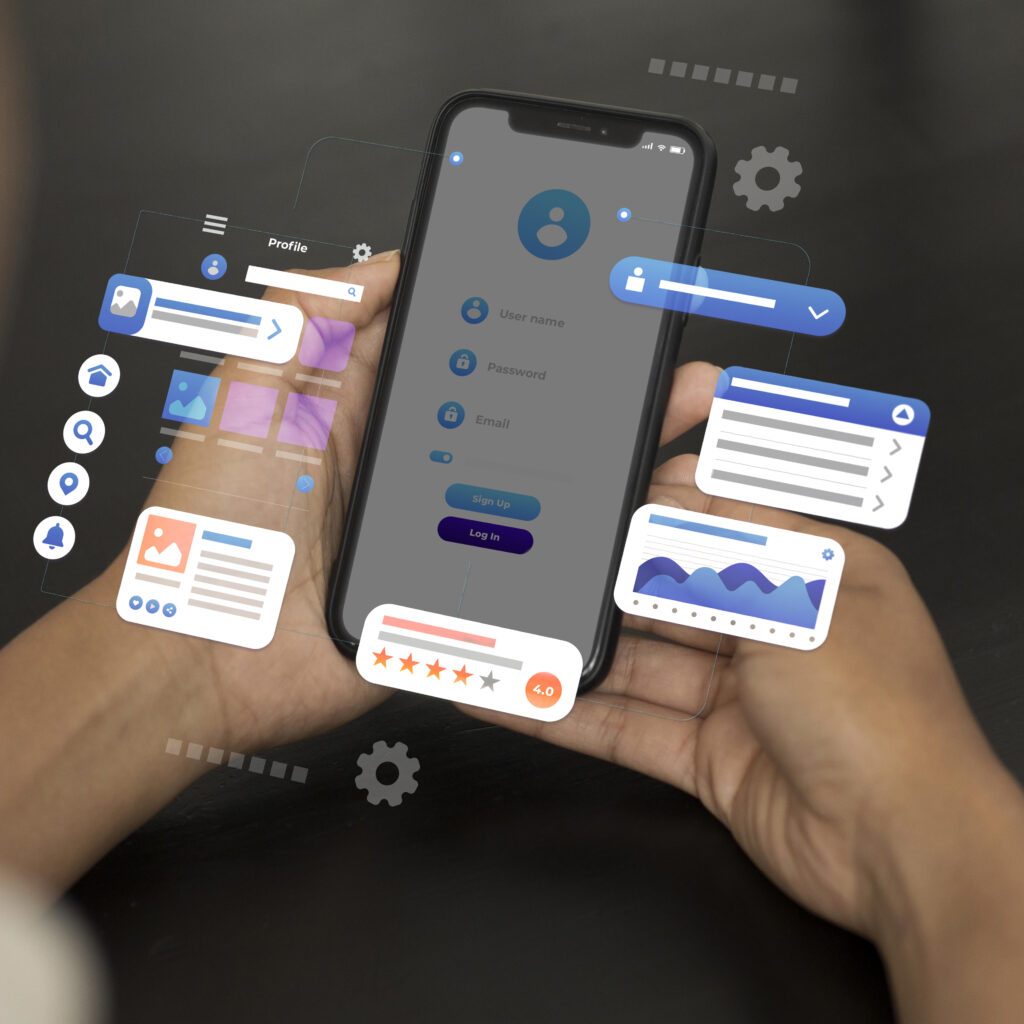
What Is Context Awareness in Mobile Experiences? Mobile expression Context awareness is the ability of an application to identify and understand data about the surrounding of the user, what is going on, and the availability of the device in the present moment. The applications dynamically change the behavior based on a sensor-collected data, like GPS, accelerometer, and ambient light sensors, as well as the external data like weather and calendar events, etc. This allows personalized, relevant, and timely exchange to the present context of the user. Context-based applications contribute to the enhanced usability of application by predicting user needs and making adaptation in the content, notifications and interface to facilitate the flow of experience. Adaptive Apps: The Next Frontier in Context-Aware Mobile Experiences The high rate of mobile technology development has seen a new breed of applications with the name adaptive app—these applications dynamically adjust their behaviour depending on the situation that the user is in through real-time adaptation, content adjustment, interface adjustment, and functionality adjustment. Unlike traditional applications that offer an unchanged experience irrespective of time and location, adaptive applications use data as provided by sensors on the device, user interaction, environmental factors and other external forces to create user-friendly and custom experiences. The flexibility of the applications makes them easier to use, enjoyable, and useful, hence initiating a major change in the interactions between users and mobile applications. Understanding Adaptive Apps and the Technology Behind Them Adaptive applications require a heavy usage of context awareness, which is made possible through the use of modern smartphones and wearables that have numerous sensors having the ability to sense things like GPS, accelerometers, gyroscopes, ambient light sensors, and biometric tracking devices. These sensors constantly monitor the environment and actions of the user he/she is in. This information is processed with artificial intelligence and machine learning methods to find patterns, anticipate the needs of potential users, and provoke real-time changes in content, interface, and functionality in the app. Connections to cloud computing enable more advanced analytics and customization , and edge computing provides low-latency reaction. Moreover, adaptive applications access information on external platforms such as weather, calendars, social media, and IoT devices, therefore, making it possible to have a full situational awareness. Benefits and Opportunities of Adaptive Apps Switching to adaptive applications brings with it a lot of benefits to the users and the developers. Users have the advantage of extremely relevant and customized experiences that react real time with changing conditions thus increasing the engagement and satisfaction. An example of smartphone application that uses adaptive fitness are changing exercise recommendations to fit the users location, weather, and past activity, and an example of a smartphone app that switches between walking and driving modes is a navigation application. Adaptive interfaces enhance the access by scaling or rearranging the UI elements based on the device type and preferences of the user. Also, adaptive applications can optimize the resources of the device, including saving battery, and changing network activity according to the status of connection. Alternatively, to developers and businesses, adaptive applications create new opportunities in user differentiation, efficiency in operations, and loyalty. Challenges and Best Practices in Developing Adaptive Apps The Future of Adaptive Mobile Experiences The future of adaptive apps is inextricably associated with improving technologies like 5G, more powerful AI applications, augmented reality, and wearables that can offer more and more comprehensive contextual data. Adaptive applications will be more immersive and seamless experiences as voice assistants and interconnected IoT ecosystems become more mature. Those that adopt adaptive embedded technology will gain competitive advantages through the provision of smarter, more responsive applications that are more responsive and aligned to the needs and preference of users which will eventually promote growth and innovation to thrive in the mobile world.
Adaptive Apps: The Next Frontier in Context-Aware Mobile Experiences

What Is Context Awareness in Mobile Experiences? Mobile expression Context awareness is the ability of an application to identify and understand data about the surrounding of the user, what is going on, and the availability of the device in the present moment. The applications dynamically change the behavior based on a sensor-collected data, like GPS, accelerometer, and ambient light sensors, as well as the external data like weather and calendar events, etc. This allows personalized, relevant, and timely exchange to the present context of the user. Context-based applications contribute to the enhanced usability of application by predicting user needs and making adaptation in the content, notifications and interface to facilitate the flow of experience. Adaptive Apps: The Next Frontier in Context-Aware Mobile Experiences The high rate of mobile technology development has seen a new breed of applications with the name adaptive app—these applications dynamically adjust their behaviour depending on the situation that the user is in through real-time adaptation, content adjustment, interface adjustment, and functionality adjustment. Unlike traditional applications that offer an unchanged experience irrespective of time and location, adaptive applications use data as provided by sensors on the device, user interaction, environmental factors and other external forces to create user-friendly and custom experiences. The flexibility of the applications makes them easier to use, enjoyable, and useful, hence initiating a major change in the interactions between users and mobile applications. Understanding Adaptive Apps and the Technology Behind Them Adaptive applications require a heavy usage of context awareness, which is made possible through the use of modern smartphones and wearables that have numerous sensors having the ability to sense things like GPS, accelerometers, gyroscopes, ambient light sensors, and biometric tracking devices. These sensors constantly monitor the environment and actions of the user he/she is in. This information is processed with artificial intelligence and machine learning methods to find patterns, anticipate the needs of potential users, and provoke real-time changes in content, interface, and functionality in the app. Connections to cloud computing enable more advanced analytics and customization , and edge computing provides low-latency reaction. Moreover, adaptive applications access information on external platforms such as weather, calendars, social media, and IoT devices, therefore, making it possible to have a full situational awareness. Benefits and Opportunities of Adaptive Apps Switching to adaptive applications brings with it a lot of benefits to the users and the developers. Users have the advantage of extremely relevant and customized experiences that react real time with changing conditions thus increasing the engagement and satisfaction. An example of smartphone application that uses adaptive fitness are changing exercise recommendations to fit the users location, weather, and past activity, and an example of a smartphone app that switches between walking and driving modes is a navigation application. Adaptive interfaces enhance the access by scaling or rearranging the UI elements based on the device type and preferences of the user. Also, adaptive applications can optimize the resources of the device, including saving battery, and changing network activity according to the status of connection. Alternatively, to developers and businesses, adaptive applications create new opportunities in user differentiation, efficiency in operations, and loyalty. Challenges and Best Practices in Developing Adaptive Apps The Future of Adaptive Mobile Experiences The future of adaptive apps is inextricably associated with improving technologies like 5G, more powerful AI applications, augmented reality, and wearables that can offer more and more comprehensive contextual data. Adaptive applications will be more immersive and seamless experiences as voice assistants and interconnected IoT ecosystems become more mature. Those that adopt adaptive embedded technology will gain competitive advantages through the provision of smarter, more responsive applications that are more responsive and aligned to the needs and preference of users which will eventually promote growth and innovation to thrive in the mobile world.
Decoding Every Shopper: How Retailers Unlock Deeper Connections With Salesforce Data Cloud

In the rapidly changing retailing environment, companies can no longer believe to think about every shopper as a transaction. As customers move through digital platforms, mobile apps, brick and mortar locations, and service centres in their buying experience, in many cases, in a single purchasing effort, the retailers have realised that understanding each individual customer is the main assumption to sustainable market development. Such transformation in dealing on a transactional basis to a relationship-based business is enabled, now more than ever, with the help of platforms like Salesforce Data Cloud. Meeting Shoppers in Every Moment Salesforce Data Cloud is not only a database of customers. It is a constantly evolving, real-time service that incorporates information across an infinite number of touchpoints: online orders, social media communications, in-store visits, customer support calls, customer loyalty programmes, loyalty mobilizations, and even window shopping. Instead of gathering information in isolated silos, Data Cloud puts it all together, tying it to a single and integrated, 360-degree profile of each shopper. As a result, rather than viewing Mary as a non-identified visitor visiting a web site, a retailer can identify what brands Mary likes, what she has bought previously, whether she is a loyal or a non-loyal customer, and what she has said after an earlier customer-support experience. Mary does not come to the store or even make a purchase online as a stranger or a number, but as a recognised appreciated customer whose likes and history inform all the interactions. Real-Time Insights Fuel Real-Time Personalization The ability to bring together customer data is only the start. Salesforce Data Cloud transforms raw data into insights that can be put into practice by the use of strong AI and machine-learning. This is where the change is seen in the case of retailers. The real-time processing of Data Cloud enables a brand to address the needs of the customer in real-time. When a shopper abandons a cart online, e.g., a shopper can get a personalized follow-up instantaneously through email or a mobile device with a suggestion of similar products or an aid. Personalization, powered by AI, is not only limited to the digital medium. Associates working in-store who are equipped with the devices linked with Data Cloud will be able to see purchase history, wishlists, and previous requests of each customer. This allows real time chatting and really attentive service. For example, a retail associate who notices that a customer frequently purchases athletic wear can offer personalized discounts or highlight new products tailored to their interests, thereby enhancing customer satisfaction and fostering loyalty. Predictive analytics and AI-powered insights, especially through Salesforce’s Einstein AI, play a critical role in enhancing the capabilities of Data Cloud. Einstein leverages vast amounts of real-time data, machine learning, and AI-powered insights to anticipate customer needs, predict buying behaviors, and automate personalized interactions across all customer touchpoints. This empowers retailers to move beyond descriptive analytics and embrace predictive strategies that drive personalized shopping experiences, improve customer loyalty, and optimize inventory and marketing efforts. By integrating these advanced technologies, Salesforce Data Cloud offers a unified view of each shopper and actionable intelligence that helps retailers stay ahead in the competitive omnichannel retail landscape. Unifying Omnichannel Experiences The modern clientele prefers uniformity as opposed to channels. They are demanding a smooth ride when going through a site into an application, a social media ad into a visit to a physical store, driven by retail analytics, unified customer profiles, AI-powered insights, and personalized shopping. Salesforce Data Cloud is designed to bring all these omnichannel journeys together. Introducing a harmonised shopping, mobile browsing, and in-store purchases into one perception is Data Cloud that guarantees the customers an aestheticised, customised online shopping, mobile browsing, and in-store purchase experience regardless of the medium. To retailers, this will minimise confusion, create unlimited sphere of engagement and bond the brand with the shopper. Because clients interact through several touchpoints, Data Cloud helps the retailer to turn on the relevant data automatically. As an example, a recent in-store purchase can prompt a thank-you email with a personal introduction, an exclusive loyalty offer in the application, or a morning-time product suggestion on the site of the brand. Well-placed such moments cause trust and emotional bonding to be built, – turning one time purchasers into loyal supporters. From Segmentation to Individualization Whereas the data platforms of the traditional world tend to divide customers into large segments: age, locality, or generic tastes, Salesforce Data Cloud due to its high levels of integration crosses group profiles. It makes real individualisation to be empowered. Marketers and merchandisers are able to conduct their explorations to extremely detailed shopper behaviours in real-time, splitting the audiences based on particular interests, timely actions, as well as changing needs. As an example, a retailer may know of the customers who have recently visited running gear, left their shoe shopping efforts midway and are about to run out of loyalty points. The single perspective data cloud promotes agile campaigns and this enables teams to deliver exactly the right message, at the right time, through the right channel. These direct programs will produce better conversion, better interaction and eventually increase lifetime value to the retailer. Smarter Inventory and Store Operations Marketing is not the only issue that retail is involved in; operational intelligence is also a major issue. Data Cloud helps the retailers to keep track of inventory, sales trends and store performance on real time basis. When a fashion retailer leverages Data Cloud, it gains insights into which products are selling well online and can then adjust inventory in physical stores accordingly, ensuring that popular items are available wherever customers choose to shop. This agility is no longer about minimising stockouts or avoiding overstock, this is also about retailers to design promotions, supply chains, and even future demand variations using a combination of historic and behavioural data. The customers trust and have loyalty when they realize they can rely on a retailer to not only make sure they can make their choice but
Building Conversational Apps: What ChatGPT’s App Store Means for Developers
The conversational artificial intelligence has transformed how human beings interact with technology as it made it easier, faster, and more accessible to communicate. The ChatGPT developed by OpenAI is among the most significant forces behind this revolution and has reached a high level of adoption thanks to its natural language learning and generation capabilities. In 2025, OpenAI launched the ChatGPT App Store an ecosystem to allow developers to design, distribute and monetise chat applications that can expand the capabilities of ChatGPT in a variety of applications. This novel platform marks a breakthrough in the history of developers, opening vast opportunities and challenges of developing conversational applications. The given article offers the investigation of the ChatGPT App Store implication on developers, defines the advantages of the tool, technical aspects, and a perspective of the future of conversational application development. The Rise of Conversational AI and ChatGPT Conversational AI uses current developments in deep learning, large language models, and natural language processing to understand sophisticated user queries and respond in the style of human conversation. Unlike a static app or a normal chatbot, ChatGPT uses a context-driven language generation to (therefore) enable natural, interactive and smart dialogues. ChatGPT has been used in various sectors including the customer support, education, healthcare, entertainment, and productivity tools, since its inception. The developers and businesses have recognised its ability to automate the interactions, reduce friction, and provide personalised user experiences. Introduction to the ChatGPT App Store The ChatGPT App Store is an open market created by OpenAI and allows developers to post third-party applications, which can easily connect to ChatGPT, to expand its functionality. These applications include specialised knowledge databases, productivity generators, domain creative tools and domain specific assistants. To the developers, the App Store offers: By providing these tools and a marketplace, OpenAI gives developers the ability to do more in the field of conversational AI without having to create language models and infrastructure newly. Key Benefits for Developers Technical Considerations in Building Conversational Apps Although this is the case, developers have to take into consideration key technical considerations during ChatGPT building: Examples of Conversational Apps on ChatGPT’s App Store The diversity of the App Store can be found in several of its early apps: Challenges Developers May Face On the one hand, such a path is promising, however, the creation of conversation applications on the ChatGPT platform is fraught with difficulties: The Future of Conversational App Development The ChatGPT App Store forms only the beginning of larger models of conversational AI, where AI emulates can converse with each other, shared with the IoT and functional across interfaces of all types, such as video and voice. The improvement in multi-turn memory, emotional intelligence and cross application interoperability in the future will enable conversational applications to provide fully interactive digital experiences. To the developers, life-long learning, monitoring AI development, and focus on user-centred design will become the success factors in this fast-growing field. Conclusion The ChatGPT App Store of OpenAI opens the doors to new prospects for developers who are hoping to create with conversational AI, enhancing user engagement. It reduces the technical divides, provides an existing audience, and presents new monetisation opportunities. Despite this, it must be thoroughly designed with regards to context, privacy and the user experience to be successful. With the continued proliferation of conversational AI across sectors and devices in 2025 and further, creators of applications in these systems will determine the future of human-computer interaction, creating more naturalized, useful, and compelling online experiences.
Enhancing Retail Customer Support with Salesforce Service Cloud

In the modern competitive retail environment, the need to provide an outstanding customer service is no longer a framework, it is a requirement. Retailers need to interact with the customers in an effortless manner through a myriad of vehicles, correct the mistakes as fast as possible, and customize the experience to create loyalty and gratification. Salesforce Service Cloud is a revolutionary product capable of enabling retail companies to drive customer experience functions to a new level. Herein, we analyze how Salesforce Service cloud is transforming customer service of retailers, improving agent productivity, and enhancing excellent customer experiences. Understanding the Retail Customer Support Challenge The retail customer support is complicated by the variety of customer needs and means of communication. Clients demand to receive quick answers to their questions about the products, orders, returns, and personalized shopping recommendations. Additionally, support should be accessible 24/7 across all customer contact channels, including phone, email, chat, social media, and in-person interactions.Retailers can be victims of hasty data, inconsistency in message delivery and long resolution times without an integrated system and the net effect is an unhappy customer. The Power of Salesforce Service Cloud Salesforce Service Cloud is a customer support platform which is cloud based and is created to streamline and make support teams powerful. It combines different sources of customer information to make unified 360 customer view, which can be accessed by the agents in real-time. This is omnipresent availability that allows contextual and personalized service, which results in quicker and more precise responses. Key features of Salesforce Service Cloud that benefit retail customer support include: Personalization: The Integration Advantage The important aspect of customer relationship is personalisation. Salesforce Service cloud is connected with Salesforce marketing cloud and Salesforce Commerce cloud where the agents can monitor the purchase history, loyalty status, and past interactions of a customer service in the same platform. This combination makes it easier to communicate individually, make promotions, and reach out to the services. To take a specific example, an agent will be able to provide immediate customized discounts or inform customer of pertinent products release based on the profile, and thus push the upsell opportunity and enhance customer loyalty. Empowering Agents and Enhancing Productivity Salesforce Service Cloud is meant to elevate the performance of the agent as well as increase the level of satisfaction. It has an intuitive user interface that gathers all the information about the customers thus avoiding the need to switch between different systems. Such functionality as drag-drop assignment of cases, automated processes, and AI-assisted suggestions facilitate daily activities and allow agents to pay more attention to intricate problems and constructive conversations. Mobile access, also guarantees accessibility of agents to respond to query anywhere in any time which becomes especially helpful in a setting such as retail outlets (one store is not sufficient to service another store). Seamless Omnichannel Experiences The customers of the omnichannel world today demand smooth continuity of communication means. Service Cloud ensures permanency since all communications remain one record of service cases regardless of communication channel. A request launched by means of social media chat can be easily transferred to a phone call or e-mail, without customers having to repeat information. This unity will empower the customer experience, alleviate feelings of frustrations and hasten the solution of problems. Driving Continuous Improvement with Data Insights Exceptional retail support is based on data-driven decisions. The analytics tools of Salesforce Service Cloud indicate patterns of problems encountered by customers, high traffic days and the performance of agents. Retail managers use these insights to optimise their staffing, to fine-tune processes and to introduce specific training programmes. Also, the customer satisfaction is measured by feedback-collector tools built into the platform, enabling one to find out areas needing improvements. Scalable and Flexible Integration The open character of Salesforce Service Cloud enables it to be integrated with a wide range of other third-party applications, ERPs, and e-commerce platforms. This scalability is what enables retailers to develop bespoke support eco-systems that meet their operational utilities. Due to the growth of retail business, Service Cloud can expand easily, serving the growing number of customers and the changing needs of the services offered by the company without negatively affecting its performance.This scalability ensures that businesses can maintain high-quality customer support even during peak periods or rapid expansion phases. By leveraging Service Cloud’s flexible infrastructure, retail companies can seamlessly integrate new communication channels, automate routine tasks, and provide personalized service experiences. This adaptability not only enhances customer satisfaction but also improves operational efficiency, allowing support teams to focus on complex issues and strategic initiatives as the business evolves. Conclusion Salesforce Service Cloud will enable retail companies to provide quick, personalised, and smooth customer service. It ensures that customer service has become a competitive differentiator by bringing together data, automating the workflow, facilitating omnichannel contact, and offering insights that can be acted upon. Affiliates using this commanding platform will be able to boost productivity of the agents, customer satisfaction and eventually lead to growth of business in the challenging market today. To retailers interested in upgrading their customer care, Salesforce Service Cloud may provide a holistic and scalable and smart package that can help them to make their customers happy and surpass expectations.
Data Cloud vs Marketing Cloud Engagement: What Marketers Need to Know in 2025

In the current fast changing environment in marketing, the ability to utilize the data and connect with customers in various channels is inseparable in the success game. Salesforce as a leading company in providing Customer relationship management solutions provides two platforms, which are complementary but distinct, to assist marketers: Data Cloud and Marketing Cloud Engagement. By having a clear insight into the differences between these platforms and how to make the most out of them, personalized data-driven marketing strategies can be used to increase engagement, conversions, and brand loyalty in 2025. Understanding Salesforce Data Cloud Salesforce Data Cloud is a central data point that collects data about customers presented by a vast number of interfaces, such as CRM and email programs, websites, applications, and social media, among other third-party data providers. This platform brings together different sets of data to build a holistic, real-time 360 customer profile. The marketers will gain a better understanding of the customer behaviours, preferences and interactions and this will enable them to make a more accurate segmentation and targeting. Data Cloud has important capabilities, including identity resolution that accurately identifies customer identifiers across systems; real-time data ingestion that enables you to get insights in real-time; and sophisticated analytics, based on artificial intelligence, to anticipate customer needs and behavior. This single-minded, smart data platform enables the marketer to divide the audience into segments with valuable behavioural and demographic data, which allows the most personalised and efficient campaigns. Exploring Marketing Cloud Engagemet Salesforce Marketing Cloud Engagement, on the other hand, focuses on the service side of marketing that is, designing, executing and optimising campaigns that deliver messages to customers via a variety of channels including email, SMS, social media, advertising as well as personalised websites. It provides a set of solutions aimed directly at automating campaigns, organising customer journeys, personalising content, and analytics. Marketing Cloud Engagement enables marketers to build compound, multi-touch customer journeys triggered by certain actions or buyer lifecycle events. Journey Builder is one of the features offered that allows an easy drag and drop interface to automate communications and nurture leads with relevant messaging. Also, the analytics feature of Marketing Cloud provides real-time reporting on the level of engagement and conversion, which allows marketers to refine their strategies in real time. Key Differences Between Data Cloud and Marketing Cloud Engagement Although the two platforms are inseparable to the current marketing success, they have different purposes: How Marketers Can Leverage Both Platforms Together The majority of organisations find that the integration of the Data Cloud and Marketing Cloud Engagement is the most effective. Incorporating the enriched and segmented customer data of Data Cloud into Marketing Cloud Engagement, marketers will be capable of conducting campaigns that have been not only targeted accurately but also dynamically personalised on a massive scale. As an example, a marketer may choose to use Data Cloud to create a subset of customers with a high purchase intent due to recent behaviour and predictive scoring.Such segments can then be brought into the Marketing Cloud Engagement where an individualised email campaign, an SMS offer, or a social media retargeting according to individual preferences and engagement history can be launched.This kind of integration will increase the efficiency because marketing efforts will be centred on high-value consumers and optimise conversations to create increased engagement and conversions. It is also helpful in achieving closer sales and marketing coordination via common data and campaign orchestration. Trends Influencing Data Cloud and Marketing Cloud Engagement in 2025 In the future, there are a few important trends that will influence the way marketers will use these Salesforce platforms: Challenges Marketers Should Consider In spite of the strong nature of these platforms, marketers have to deal with a number of issues to achieve maximum success: Conclusion These are Salesforce Data Cloud and Marketing Cloud Engagement which are essential elements of the technology stack of the modern marketer. Data Cloud forms the basis and offers consolidated data of the customers and vast segmentation, whereas Marketing Cloud Engagement offers the means to plan, mechanise, and refine multi-channel campaigns. Combined, they enable marketers to deliver royal, relevant and timely experiences, which meet customer expectations and result in calculated business gains. With marketing becoming more and more complex and extensive in 2025, achieving the domain of mastering these sites and incorporating their advantages will become part of any business that is willing to stay relevant and customer-focused in a more data-driven environment.
Google’s Major 2025 Updates for Android and Play Store App Developers

The Android application development and distribution landscape is in constant motion and Google continues to lead this change by introducing updates that follow the events that are inherently consequential to the way developers create, launch and improve their applications on the Play Store. By 2025, Google has already introduced a sequence of great improvements not only to make the experience better for both to users and developers but also to set new standards of application security, quality, discoverability and monetization. This paper looks into these new developments in passionate detail, explains their responses on app developers, and discusses how companies can use these new developments to increase their personal footprint on the Google Play Store. Target API Level Requirements: A Push for Modernization The implementation of new apps and updates to higher Android API levels is among the most impactful changes that Google has implemented this year and is mandatory. All new applications and updates should be built with Android 15 (API level 35) or later as of 31 August 2025, to be published via the Play Store, with some exceptions of Wear OS and Android Automotive OS, which have earlier deadlines. This is a necessity that underlines Google dedication to make sure that the applications utilize the most recent security, performance, and user experience enhancements natural to the modern Android versions. To developers, it requires the re-writing of the codebases into versions that do not support the deprecated APIs, can be updated to new behavior defined in the latest operating system and extensive testing of the new version of the platform. The initial work might need investment but in the long-term, higher levels of app stability, increased security measures, and the ability to be compatible with a greater number of devices that run the latest Android platforms will be attained. Enhanced Developer Tools and Insights Google has also extended its range of solutions that help developers to monitor the performance of the application as well as its user engagement better. The new overview page (Grow) offers a one-stop dashboard, which delivers real-time metrics in the areas of reach, acquisition, engagement, and retention. This helps the developers to quickly evaluate changes regarding situations and focus on efforts aimed at optimizing user experience. There is also the new YouTube performance dashboard, which creators can use to know how their video content (trailers to tutorials) is making people install and engage. Considering that the content optimization of the cross-channel is considered the priority when the developers sell their applications in various platforms, this work-specific dashboard simplifies effectiveness tracking. The other update that has been accepted by many people is the presence of the Play Policy Insights beta in the Android Studio, which provides in-context policy guidance. This advantage assists the programmers to prevent typical policy traps during early stages of the project development phase thus decreasing time loss or failure of the apps during reviewing. Regarding an ecosystem as large and dynamic as Google Play, these early-warning systems and actionable insights are essential in making the process of launching and updating apps smoother. App Quality and User Experience Enhancements Google has revamped its and redirected its attention to assure quality in the application and devised new pre-review actions in terms of Play Store submission. Issues like inappropriate edge-to-edge rendering, when problems are identified by metrics like excessive partial wake lock, etc., are now reported to the developers. This proactive strategy can be used to ensure that apps can provide an impressive and comfortable experience in the most varied range of devices: mobile phones, tablets, foldables, etc. In addition, the capability to stop full roll-outs releases is an effective weapon of developers. In case any problematic version of the app is identified after its release, the developers will have an opportunity to suspend the distribution of that specific version thus avoiding large volume of negative reviews and possible loss of users. The mechanism of responding control proves the willingness of Google to balance the elements of publishing speedy innovation with user contentment and safety. Google Play Games Level Up Program The gaming sector is still one of the fastest-expanding types of application, and the new Play Games Level Up program that Google implements brings together the best resources and prospects of game developers. This effort supports growth through resource access to the best user-experience practice as well as through generic benefits like the provision of a special user interaction area called the You tab. Level Up is a program that incentivizes game developers to attain and satisfy the core quality requirements in order to receive an award, such as improved discoverability on the Play Store. This focused service to gaming applications is a blessing of the technique that Google employs in keeping Play as the premier source of the premium gaming experience. Global Expansion and Content Curation Reaching more markets via application developers remains a priority to Google and in this regard, it has been providing application developers with Play Store collections as they are now available in other regions such as Australia, Brazil, Canada, India, Indonesia, Japan, Mexico, and the UK. Curation of thematically designed collections (e.g., a travel collection, reservations collection, recommendations) means that a user gets a more personal discovery experience, and developers gain greater visibility in the relevant audience. Besides, Collections have been enriched with the new version of Android devices including older versions with Android 10 and more. This expanded device coverage means that collections will be delivered to more and wider user base, which is important in the development of the application in the nascent marketplaces. Enhanced App Promotion Capabilities New reporting metrics have been introduced by Google through pre-registration and store listing. In Google’s major updates for Android and Play Store app developers in 2025, developers now have the ability to track key pre-release engagement metrics. Specifically, metrics such as pre-registration clicks and store listing opens can be monitored to understand how effectively an app’s listing captures user interest before its official launch. This valuable