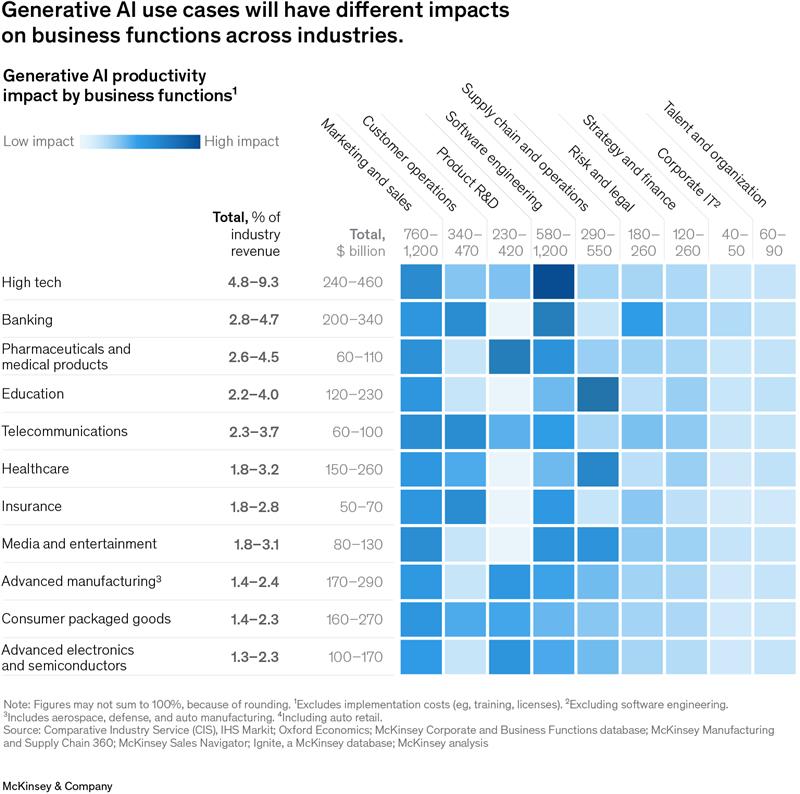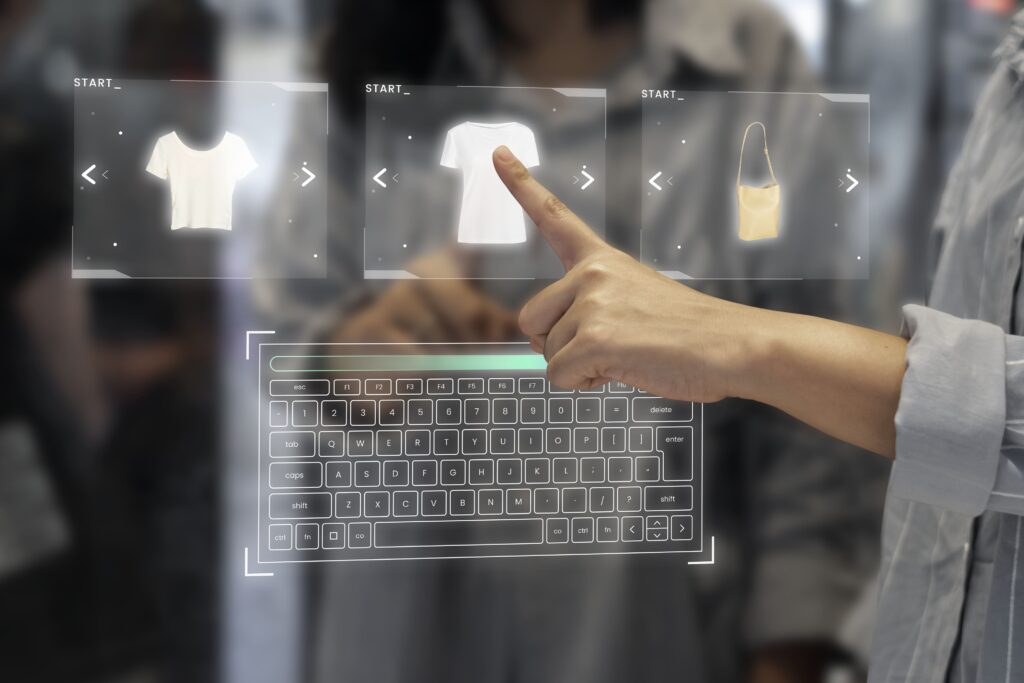
The idea of Artificial Intelligence in ecommerce is that it is no longer a futuristic add on but the engine that powers smarter storefronts, more relevant experiences, and more cost efficient operations, helping you optimize ecommerce store performance and maximize online store with AI. A well-done use of AI has led to increased conversion rates, larger basket sizes, and efficient use of marketing money, and a failure to consider it could result in disaster due to the companies vanishing amid AI-assisted search and shopping experiences.
1. Make Your Product Data AI-Friendly
Search engines, as well as recommendation engines, are AI systems which depend on rich structured product data. The first step anyone can engage in is to make sure that all product pages have titles, description, correct pricing, availability, quality images, and their identifying numbers (SKU, GTIN or brand). Include size, colour, material, use scenarios, and shipping information and use the language the same as your customers language as opposed to the use of an internal language language, so that the AI can just easily correlate your products to queries that are real-life.
Structured information, schema markup can assist AI to be able to interpret your catalogue. Use product, offer, review, and frequency asked queries schema so that AI-drawn searches and assistants are able to highlight your services with detailed information and address frequent inquiries with replies within the system. Not only does this enhance appearance on AI search results, but it also makes comparison of options less difficult on the part of customers.
2. Use AI-Powered Search and Navigation
The most intentional behaviour on your store is often on site search because there it is a simple option of a keyword box, the AI could make this a stylish guide. AI-based search can also read natural-language queries and fuzzy descriptions, and it intelligently spells out words and helps find what the customer needs even when they do not know the names of your specific products. As in the case of a query like oversized blue casual shirt or a gift to a five year old who likes space, even in these cases, there is still the possibility of receiving the exact product suggested to them.
It is also possible to specialise search results and category page in real time via AI, which re-arranges the items according to the behaviour, preferences, and purchase potential of the particular visitor. As a result, two customers might get different best matches on the same search hence chances of each finding what they desire fast are high.
3. Personalise Recommendations Across the Journey
One of the most effective methods to use AI in e-shop organisations is personalisation of product recommendations. The browsing data, cart data, previous purchases, and behaviour of other similar customers are analysed using algorithms to propose items that are the most preferred to be purchased by each shopper. You can post these suggestions on homepages, product pages (e.g. You may also like), carts (Frequently bought together), in post-purchase emails to have more cross-upsell and cross-sale.
In order to optimise your store, you will just need to start with a few of the most important placements and measure the effect on click-through rates, the frequency of adding to carts and average value of the orders. Optimise your models and merchandising principles over time, increasing the strategy products or removing low-margin goods in order that the communications are not only personalised but also drive towards the business goals.
4. Optimise Content and SEO for AI Search
The way individuals learn about products is being transformed by AI in the form of generative search and chatbots. Your content is required to be readable by both large language models and the other search engines you would want to remain on. Use benefit-centric and concise copy descriptions (that answer actual customer questions) and add the support text (FAQs, buying guides, comparison pages, etc.).
Tools powered by AI can assist you to create and optimize product copy, meta description, and blog posts more quickly and ensure that these remain SEO-friendly. Shopping engines like Shopify and other e-commerce templates have also been developed with artificial intelligence capabilities to write descriptions and automatise posts suitable to the performance statistics. Add these together with technical SEO best practices such as fast pages, having a mobile-first design, and clean site structure in such a way that AI crawlers are able to access and read your store in any reliable way.
5. Automate Customer Support with AI Assistants
Virtual assistants and AI chatbots are able to handle much of the mundane customer traffic, including order information, shipping, a return policy, and basic troubleshooting. This will offer 24/7 support, improve on response time and spare human agents to attend to highly complicated matters. Combined with your order management and CRM, AI assistants have real-time Data, allowing customers to undertake the self-serve activities such as changing delivery addresses or starting returns.
When maximising your store, it is a good idea to base it on clear high-volume topics and provide the bot with strong guardrails, which may be escalated to humans. Keep track of conversation logs, see what issues the customers meet and use this information to make the bot and your website content better.
6. Use AI for Smarter Pricing and Inventory Decisions
AI is able to predict trends according to demand, seasonality, pricing by competitors, and customer behaviour to make dynamic prices that generate margin and conversion. Even such rule-based strategies as an increase in prices on products with quick rotation or any targeted discounts on products with slow rotation can be improved with AI to react in a shorter time and more precisely to the current situation.
The AI can be used in operations by forecasting demand to ensure that the warehouse and store have the correct amount of stock at any given moment to prevent stockouts and overstocking. With improved predictions, sales lost will be reduced, holding costs will decrease and the process of serving the customer will be streamlined in case the product is always in stock.
7. Make Your Marketing More Efficient with AI
AIs will make your marketing perform better in email, advertising, and in-store marketing. Under email, artificial intelligence technologies segment customers according to their behaviour and lifecycle status and customizes subject lines, product recommendations, and timing of the mailing according to each. This improves open rates, click through rates and repeat purchases and lessening manual audience building.
In the case of paid media, AI can produce variants of creative, execution on a large scale, and automatically divert budgets to the most successful ads and audiences. It is also able to forecast the most likely visitors to convert and re-target them with a more relevant message that makes their return on ad spend more effective and eliminates the number of useless impressions.
8. Start Small, Measure, Then Scale
The best tip in optimising your e-commerce shop using AI is one that regards it as a series of small refinements over one huge project. Select a single or two use cases, e.g. smarter search and basic recommendations, and set specific metrics, e.g. conversion rate, average order value, or support resolution time. Run time-boxed experiments, compare outcomes with your baseline and scale-up those initiatives only which have evident effects.
In conclusion, using AI in ecommerce is about consistent, practical improvements rather than one big transformation. When you structure your product data clearly, upgrade search and navigation, personalise recommendations, enhance AI search focused content and SEO, automate support, and apply AI to pricing, inventory, and marketing, you steadily convert traffic into higher value orders with less wasted spend. If you start small, measure each change carefully, and scale only the tactics that prove their impact, you can systematically optimize ecommerce store performance and maximize online store with AI while building smarter storefronts that stay competitive as customer expectations and AI search keep evolving.