Introduction
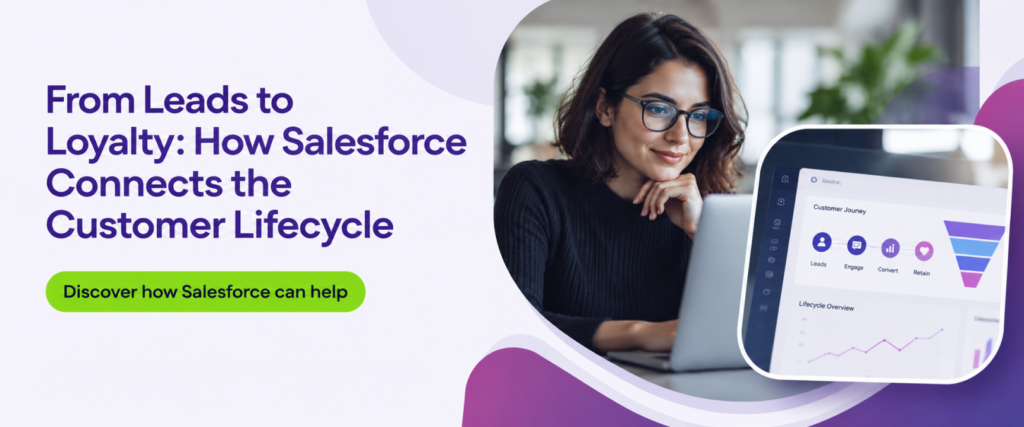
Modern customers expect a consistent, personalized experience at every stage of the customer lifecycle. Coordinating these interactions to ensure such an experience requires more than just disparate tools for individual stages. Salesforce helps companies manage the end-to-end customer lifecycle to drive engagement, collaboration, and growth.
Understanding the customer lifecycle
What is the customer lifecycle?
It is the entire set of stages that a customer goes through when interacting with a company.
The six core stages
Lead generation, nurturing, conversion, service, retention, and advocacy.
Why businesses need a unified customer view
Having a united view of the customer lifecycle is essential to be able to provide appropriate treatment to each customer.
Stage 1: Attracting and capturing leads
- Building awareness with salesforce: By developing targeted marketing campaigns.
- Marketing campaign management: They are constantly monitored and optimized using Salesforce Marketing Cloud to drive higher engagement.
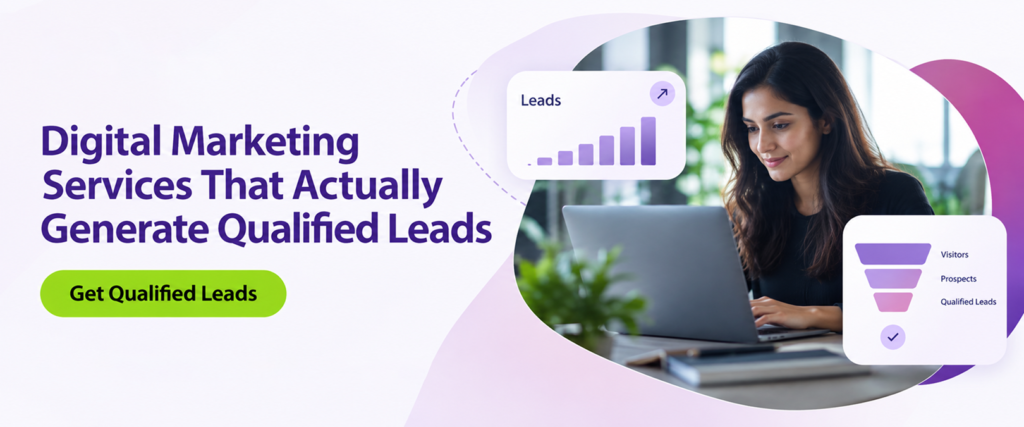
- Lead capture across channels: Leads can be captured across multiple channels, including websites, social media, events, and digital forms.
Stage 2: Nurturing prospects through the buying journey
- Turning interest into intent: By providing them with relevant content that nurtures them through the buying funnel.
- Lead scoring and qualification: By assigning scores to your leads based on specific criteria.
- Automated lead nurturing: By deploying automated lead-nurturing emails.
- Sales and marketing alignment: By providing both teams with detailed information about the leads and prospects.
Stage 3: Converting leads into customers
- Accelerating sales with salesforce sales cloud: By utilizing Salesforce Sales Cloud to manage their outreach activities.
- Sales automation: It assists sales representatives by helping them manage the complex selling process, including opportunity management, pipeline visibility, and automation of administrative tasks.
- AI powered selling with salesforce einstein: This artificial intelligence can recommend the next steps for sales representatives.
Stage 4: Delivering exceptional customer experiences
- Supporting customers after the sales: By providing them with excellent support.
- Customer service with service cloud: By using Service Cloud to manage customer service requests to ensure excellent management.
- AI powered customer support: It can analyse cases and respond appropriately to customer inquiries.
- Creating a 360-degree customer view: By using Salesforce Data Cloud.
Stage 5: Driving customer retention
- Keeping customers engaged long term: By engaging with them consistently.
- Personalized engagement strategies: By providing them with relevant offers based on their preferences.
- Salesforce data cloud for unified insights: By analysing customers’ individual characteristics, this artificial intelligence can advise what actions to take to keep them as customers.
- Proactive customer success initiatives: By anticipating and addressing customer concerns.
Stage 6: Building customer loyalty and advocacy
- Turning customers into brand advocates: By rewarding them for their loyalty.
- Loyalty program management: This artificial intelligence can assist in designing individual loyalty programs for each of your customers.
- Personalized customer experiences: By engaging them consistently and providing them with positive experiences.
- Community building with experience cloud: It can be used to facilitate the creation of a community around your brand.
The role of AI throughout the customer lifecycle
Salesforce Einstein can be leveraged throughout the customer lifecycle to help drive engagement, sales, customer support, and loyalty by analysing data, automating processes, providing recommendations, and assisting with complex tasks.
Benefits of managing the entire lifecycle with salesforce
- Improved customer experience
- Higher conversion rates
- Increased customer retention
- Better team collaboration
- Data driven decision making
- Greater revenue growth
Real world example: a connected customer journey
One example of a connected customer lifecycle is a prospect that becomes aware of the organization through a marketing campaign, becomes a lead, is converted into a customer using Salesforce Sales Cloud, receives ongoing support via Service Cloud, continues to be engaged using Salesforce Data Cloud, and eventually becomes a brand advocate on Experience Cloud.
Best practices for lifecycle management with salesforce
Companies should adopt a united approach to the customer lifecycle, centralize customer information, utilize automation, leverage artificial intelligence to get insights, and optimize engagement to maximize the customer lifetime value.
Key metrics to track across the customer lifecycle
Some key performance indicators (KPIs) for each stage of the customer lifecycle include lead-to-customer ratios, cost per lead, customer acquisition costs, retention rates, customer lifetime value, Net Promoter Score, and overall satisfaction.
Conclusion
By managing the end to end lifecycle of customers with Salesforce, companies can drive higher levels of engagement while encouraging customer retention and loyalty. By uniting marketing, sales, service, data, and artificial intelligence to create a connected view, organizations can maximize the value of each customer interaction while building long-term relationships that result in ongoing advocacy.